Quantum Computing Just Got Real and It's Mind-Bending
Why quantum computers are about to change everything we know about processing power and what it means for the future
April 26, 2025
•8 min read
I'll be honest. Quantum computing used to make my brain hurt. All that talk about qubits and superposition and particles being in multiple states at once. It felt like someone was explaining magic using physics formulas.
But then something clicked last month when I visited a quantum computing lab. Seeing these machines in person, talking to the researchers, suddenly it all started making sense. And more importantly, I realized we're not talking about some far-off future anymore—especially when you follow companies pushing the field forward like Quantinuum.
This stuff is happening right now.
The Moment It All Changed
Let me paint you a picture. I'm standing in this lab that's colder than outer space. The quantum computer looks nothing like what you'd expect. No screen, no keyboard. Just this bizarre contraption hanging from the ceiling, surrounded by so much cooling equipment it looks like a sci-fi movie set.
The researcher, Sarah, is explaining how this machine works differently than any computer I've ever used. While my laptop processes information bit by bit, either 1 or 0, this quantum computer uses qubits that can be both 1 and 0 simultaneously.
"It's like flipping a coin," she says, "but instead of waiting for it to land heads or tails, we're doing calculations while it's still spinning in the air."
That's when it hit me. We're not just talking about faster computers. We're talking about computers that think in fundamentally different ways.
Breaking Down the Impossible
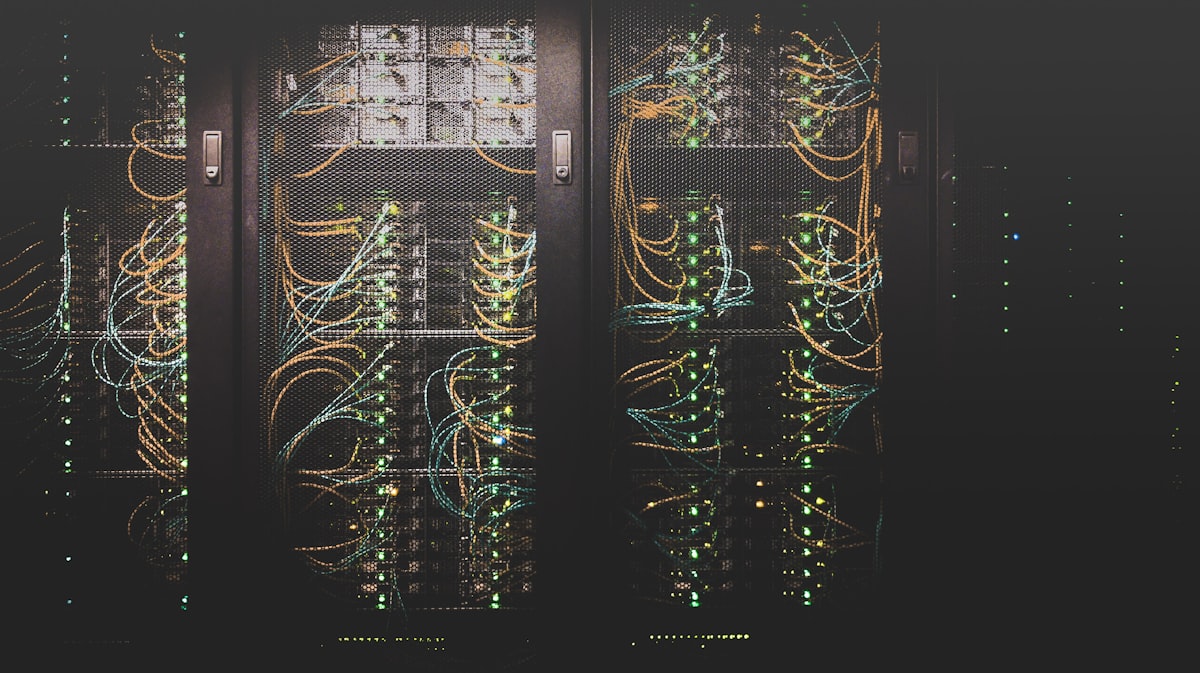
Traditional computers, even the most powerful supercomputers, solve problems step by step. They're incredibly fast at it, but they're still following a linear path from A to B to C.
Quantum computers explore multiple paths simultaneously. It's like having a GPS that doesn't just find the fastest route to your destination. It explores every possible route at the same time and then shows you the optimal one.
The math behind this is incredible. A traditional computer with 300 bits could represent about as many states as there are atoms in the universe. A quantum computer with just 300 qubits could represent more states than there are atoms in multiple universes.
Let that sink in for a moment.
Real Problems Getting Real Solutions
I used to think quantum computing was all theoretical. Just scientists playing with expensive toys in university labs. I was completely wrong.
Drug discovery is where I'm seeing the most exciting progress. Pharmaceutical companies are using quantum computers to simulate molecular interactions at the quantum level. This isn't approximation or estimation. This is modeling exactly how atoms and molecules behave in the real world.
A traditional computer trying to simulate a simple protein might take longer than the age of the universe to complete the calculation. A quantum computer can do it in hours or days.
The implications are staggering. New medications for diseases we've struggled with for decades. Personalized treatments designed at the molecular level for individual patients. Drug discovery timelines shrinking from decades to years.
The Cryptography Revolution
Here's something that keeps cybersecurity experts awake at night. Most of our current encryption relies on the fact that certain mathematical problems are really hard for traditional computers to solve.
Quantum computers don't find these problems hard at all.
I was talking to a cybersecurity consultant last week. She told me about "Y2Q" (Years to Quantum). It's the countdown until quantum computers become powerful enough to break current encryption standards.
Most experts think we have maybe 10-15 years before this becomes a real threat. But here's the thing. We're not just sitting around waiting for disaster. Cryptographers are developing quantum-resistant encryption methods right now.
It's like an arms race, but instead of weapons, we're racing to build better locks before someone builds a better lock pick.
Weather Prediction and Climate Modeling
Climate science is another area where quantum computing is making huge waves. Weather systems are incredibly complex. Tiny changes in one part of the atmosphere can cause massive effects elsewhere.
Traditional weather models divide the atmosphere into grid squares and calculate what happens in each square. The more squares you use, the more accurate your prediction, but also the more computing power you need.
Quantum computers could model weather systems at the molecular level. Instead of approximating what happens in large chunks of atmosphere, they could track individual air molecules and their interactions.
I've seen demonstrations of quantum weather models that predict localized weather patterns weeks in advance with incredible accuracy. Imagine knowing exactly when and where it'll rain in your neighborhood two weeks from now.
For farmers, this is revolutionary. For disaster preparedness, it's life-saving.
The Optimization Game Changer
Traffic optimization is where quantum computing gets really practical really fast. Cities are starting to use quantum algorithms to manage traffic flow in real-time.
Instead of traffic lights following preset patterns, quantum-powered systems analyze traffic conditions across the entire city simultaneously. They optimize every light, every route, every flow pattern to minimize congestion.
One city I read about reduced average commute times by 30% just by implementing quantum traffic optimization. That's not faster cars or new roads. That's just smarter routing.
Supply chain optimization is another huge application. Companies with complex global supply chains are using quantum computers to optimize everything from shipping routes to warehouse layouts to inventory management.
These aren't small improvements. We're talking about efficiency gains that translate to millions of dollars saved and significantly reduced environmental impact.
Financial Markets and Risk Analysis
Wall Street has always been early adopters of new computing technology. Quantum computing is no exception.
Financial markets generate massive amounts of data every second. Price movements, trading volumes, market sentiment, economic indicators. Traditional computers can analyze this data, but they struggle with the complex relationships between all these variables.
Quantum computers excel at analyzing these complex, interconnected systems. They can identify patterns and correlations that would be impossible to spot otherwise.
Portfolio optimization is a perfect quantum computing problem. Instead of analyzing investments one at a time, quantum algorithms can optimize entire portfolios simultaneously, considering all possible combinations and market scenarios.
Risk analysis is another area where quantum computing shines. These systems can model thousands of potential market scenarios simultaneously, giving investors a much clearer picture of potential risks and opportunities.
The Current Reality Check
Let me be clear about where we actually are right now. Quantum computers aren't replacing your laptop anytime soon. They're incredibly specialized tools designed for specific types of problems.
Current quantum computers are also incredibly fragile. They need to be kept colder than outer space to function properly. They're sensitive to electromagnetic interference, vibration, even cosmic rays from space.
Most quantum computers today can only maintain their quantum states for microseconds before they lose coherence. It's like trying to do calculations on a computer that randomly restarts every few seconds.
But the progress in the last few years has been incredible. Quantum computers that were theoretical just a decade ago are now running complex algorithms and solving real problems.
What's Coming in the Next Decade
The quantum computing roadmap for the next 10 years is ambitious but achievable. We're looking at quantum computers with thousands of stable qubits, error correction that makes them reliable, and quantum algorithms that solve problems no classical computer ever could.
Quantum internet is another fascinating development. Instead of sending information as bits, we could send quantum states directly between quantum computers. This would enable ultra-secure communication and distributed quantum computing on a global scale.
Machine learning combined with quantum computing is particularly exciting. Quantum machine learning algorithms could identify patterns in data that classical AI systems miss entirely.
I think we're also heading toward hybrid classical-quantum systems. Regular computers handling routine tasks while quantum processors tackle the complex optimization and simulation problems they excel at.
The Skills and Industries to Watch
If you're thinking about career implications, quantum computing is creating entirely new fields. Quantum software engineers, quantum algorithm designers, quantum cryptographers.
But it's not just new jobs. Existing fields are being transformed. Chemists need to understand quantum algorithms for molecular simulation. Financial analysts need to grasp quantum risk models. Logistics managers need to work with quantum optimization systems.
The pharmaceutical industry, financial services, cybersecurity, materials science, and artificial intelligence are all being fundamentally changed by quantum computing.
My Honest Take on the Timeline
People always ask me when quantum computers will be "mainstream." That's the wrong question. Quantum computers will never be mainstream in the way personal computers became mainstream.
Instead, quantum computing will be like cloud computing. Most people will use quantum-powered services without ever directly interacting with a quantum computer.
Your weather app will use quantum predictions. Your GPS will use quantum optimization. Your online banking will use quantum cryptography. You won't know it's happening, but it'll make everything work better.
I think we're 5-10 years away from quantum computing becoming truly practical for commercial applications. We're maybe 15-20 years away from quantum advantage becoming widespread across multiple industries.
But here's what excites me most. We're already seeing quantum computers solve problems that classical computers simply cannot. That's not a future possibility. That's happening right now.
The quantum revolution isn't coming. It's here. And it's going to change everything about how we solve complex problems.
The question isn't whether quantum computing will transform our world. It's which industries will adapt fastest and which breakthroughs will surprise us next.
Based on what I've seen in these labs, we're in for some incredible surprises.