Civic Technology Works Better When Communities Shape the Question
A practical framework for using digital tools to widen participation, improve public decisions, and show residents what changed
August 3, 2026
•7 min read
Public participation often begins with a reasonable goal: give more people a voice in a decision that affects them. Then the process becomes a survey link, a comment box, or a digital map. The tool launches, responses arrive, and participation is declared a success.
But collecting input is not the same as sharing influence.
Civic technology works when it helps people understand a decision, contribute useful knowledge, compare real choices, and see what happened afterward. It fails when a polished interface sits on top of a process that was never open to change.
The most important design question is therefore not, “Which platform should we use?” It is, “What can residents genuinely shape?”
A Participation Tool Is Not a Participation Process
A digital tool can lower some barriers. People may be able to contribute outside office hours, respond without traveling to a meeting, or explore a proposal at their own pace. A map can connect comments to specific places. A structured form can make thousands of responses easier to review.
The same tool can also create new barriers. It may assume reliable internet access, confidence with formal language, familiarity with government boundaries, or enough spare time to read a long proposal. An open comment box can be dominated by people who already know how to navigate public consultation.
Good participation combines technology with a clear process. Residents need to know what decision is being made, which parts are negotiable, who has authority, how input will be assessed, and when an outcome will be reported. Without those answers, more responses can produce more frustration rather than more legitimacy.
Start With the Decision, Not the Platform
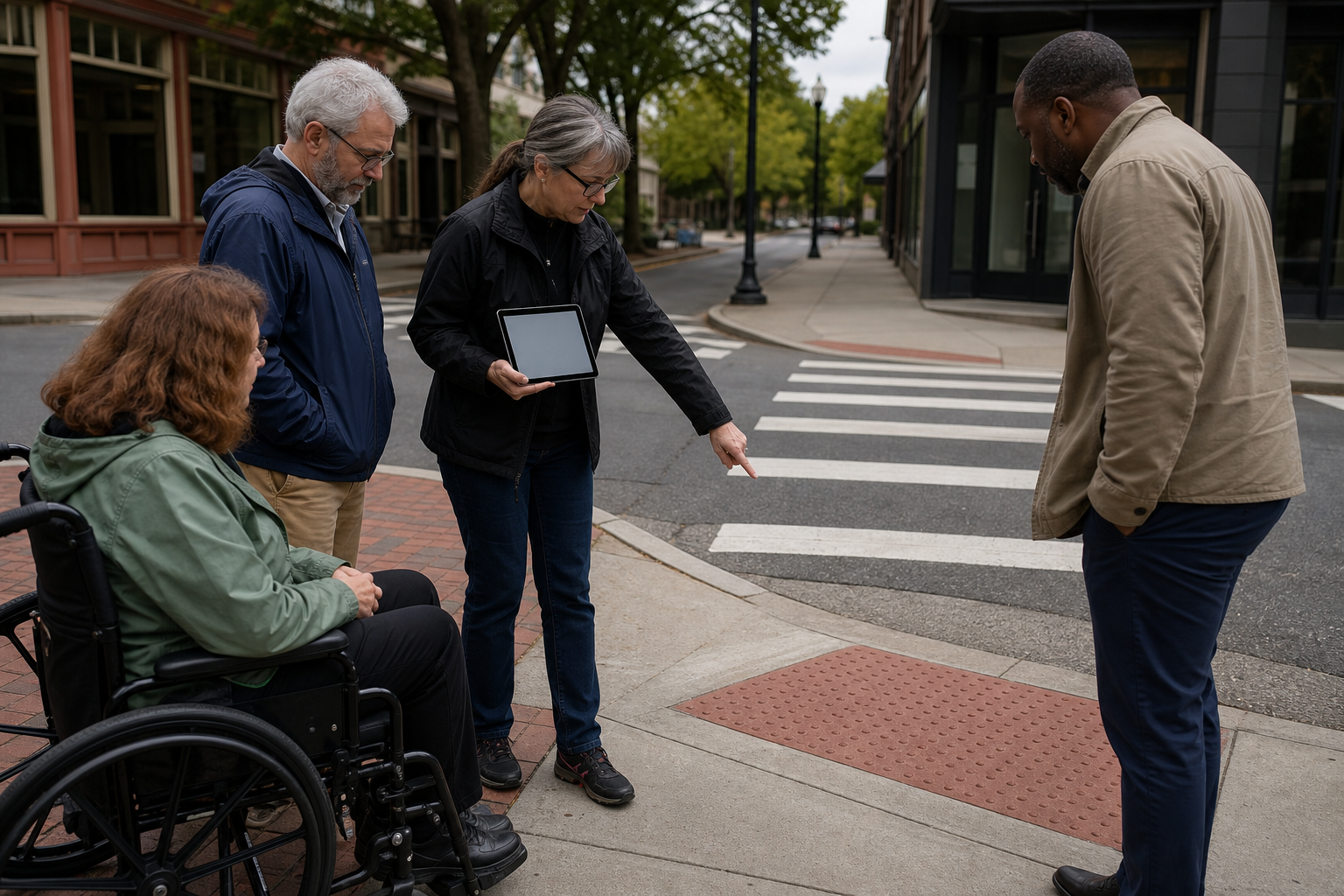
Before choosing software, define the decision in plain language. “Improve transportation” is too broad. “Choose which three crossings should receive accessibility upgrades this year” is specific enough for people to understand the constraint and contribute relevant experience.
Then identify who lives with the consequences. A citywide invitation may be appropriate for a strategic plan, while a street redesign needs deep participation from nearby residents, local businesses, transit users, pedestrians, delivery workers, and people with mobility or sensory access needs.
This is where digital participation can connect with operational tools. A city using digital twins to understand infrastructure may know the age and condition of a crossing. Residents can add the lived context the model cannot see: where drivers fail to yield, when drainage blocks a curb ramp, or why the safest route becomes unusable after dark.
Build a Complete Participation Loop
Useful civic technology supports a loop with four distinct stages.
Explain
People need a short, accurate account of the problem, the available resources, the constraints, and the decision timeline. Avoid presenting one preferred option as if it were the only realistic choice. If evidence is uncertain, say so.
Listen
Offer more than one way to contribute. A digital map may work well for location-specific observations. Short surveys can reveal priorities. Small workshops can uncover reasons and tradeoffs that fixed questions miss. Phone, paper, and in-person options remain important when online participation would exclude part of the community.
Deliberate
Participation becomes more valuable when people can consider alternatives, not merely submit complaints. Show the consequences of each option. Explain what a fixed budget can and cannot cover. Let participants revise their views after hearing different experiences.
Close the Loop
Publish a concise account of what was heard, what changed, what did not change, and why. This step should be planned before the first invitation goes out. If the final decision differs from the most popular response, explain the legal, financial, safety, or equity considerations behind it.
Use Technology Where It Adds Real Value
Different decisions need different forms of participation. The tool should match the information required.
Place-Based Knowledge
Interactive maps help residents identify unsafe crossings, missing shade, inaccessible paths, flooding, noise, or gaps in public services. The most useful maps accept observations in context and make clear how those observations will inform maintenance or investment.
Data from connected sensors and public infrastructure can add another layer, but measurement should not replace local knowledge. A sensor may record traffic speed. It cannot fully explain why a parent avoids a route, why an older resident cannot reach a bus stop, or how temporary construction changes a familiar journey.
Budget Choices
Participatory budgeting tools can make tradeoffs visible. Instead of asking whether every proposed project is desirable, they can show what fits within a fixed amount. Participants learn the cost of choices, and decision makers learn which combinations people value most.
The interface must explain cost estimates, eligibility rules, and implementation limits. Otherwise, a voting screen can make uncertain proposals look more settled than they are.
Ongoing Service Feedback
Reporting tools can help residents flag broken lights, damaged paths, missed waste collection, or inaccessible facilities. The social value comes from the service workflow behind the form: confirmation, routing, ownership, status updates, and resolution.
A reporting app that accepts a photograph but never explains what happened is not transparent. It is a digital suggestion box with better graphics.
Treat Digital Inclusion as Core Infrastructure
Online access is never evenly distributed. Some people lack suitable devices or affordable connectivity. Others face language, literacy, disability, privacy, or confidence barriers. Even residents who use technology every day may avoid a government platform if the process feels unfamiliar or risky.
Inclusive participation needs practical support. Use accessible venues, plain language, translated material, compatible assistive technology, and trusted community organizations. Provide staffed sessions where people can ask questions without surrendering control of their response. Keep offline channels connected to the same review process so paper and in-person contributions do not become second-class input.

Representation also needs active attention. A large response count can still hide important gaps. Review who participated by relevant geography and demographic characteristics, using only information that is necessary and appropriate to collect. If a group affected by the decision is missing, extend outreach before treating the result as complete.
Let Automation Assist, Not Decide
Large consultations create real review work. Software can group similar comments, identify recurring themes, translate submissions, remove duplicate entries, and help staff locate place-specific concerns. AI and machine learning tools may make that analysis faster.
They also introduce risk. Summaries can flatten minority views, translation can change meaning, and automated categories can make one interpretation seem objective. Staff should keep access to original submissions, test outputs against human review, document how tools were used, and provide a way to correct misclassification.
Automation should help people read more input carefully. It should not become an invisible substitute for judgment.
A Practical Framework for a Civic Technology Project
-
Define the decision. State exactly what can change, who will decide, and when.
-
Map affected communities. Identify people who experience the issue, including groups unlikely to join a standard online consultation.
-
Choose participation methods. Match maps, surveys, workshops, budgeting tools, or reporting channels to the knowledge needed.
-
Design for access. Provide language support, accessible formats, staffed help, offline routes, and realistic time to respond.
-
Publish review rules. Explain how input will be analyzed, how conflicting priorities will be handled, and where human judgment remains.
-
Make the decision traceable. Connect the final choice to evidence, community input, constraints, and accountable owners.
-
Report the outcome. Show what changed, what will happen next, and how participants can follow implementation.
Measure Decisions, Not Clicks
Visits, sign-ups, and response totals describe activity. They do not show whether participation improved a public decision.
Better measures ask whether affected groups were represented, whether contributions revealed information decision makers did not already have, whether the proposal changed, whether participants understood the outcome, and whether the chosen action produced a better public result.
Civic technology is most valuable when it makes participation easier to enter and harder to ignore. That requires more than an attractive platform. It requires a decision that is genuinely open, multiple ways to take part, careful handling of evidence, and a visible line from community knowledge to public action.