How Community Land Trusts Keep Homes Affordable
A practical guide to how community land trusts separate land from housing, preserve affordability, and give residents a lasting role in neighborhood stewardship
August 25, 2026
•8 min read
Affordable housing programs often face a difficult cycle. Public or charitable funding helps make a home affordable, a household benefits, and then the property eventually returns to the market at a price the next local household cannot afford. The initial investment created real value, but the affordability may last for only one sale or one funding period.
A community land trust takes a longer view. It holds land for community benefit and sets durable rules for how homes on that land are rented, sold, maintained, and passed to future residents. The aim is not to stop a neighborhood from changing. It is to keep some of its homes connected to local needs even when land values rise.
The model can support ownership, rental housing, cooperatives, community facilities, gardens, or a mix of uses. Its value comes from combining a legal structure with patient stewardship and meaningful community governance.
The Core Idea: Separate the Land From the Home
In a typical property purchase, the buyer acquires both the building and the land beneath it. A community land trust separates those two assets.
The trust owns the land and commits to holding it for the long term. A resident may buy the home itself and receive a long-term ground lease that gives them secure use of the land. In a rental project, the trust may own the land while a partner organization owns or manages the housing.
Removing much or all of the land cost from the transaction can reduce the amount a household needs to finance. The trust can combine that structure with grants, donated property, public land, or other forms of subsidy. Exact arrangements vary, but the basic principle stays the same: land is treated as shared community infrastructure rather than a one-time commodity.
This separation also gives the trust an ongoing relationship with the property. It can monitor affordability commitments, support residents through repairs or financial difficulty, and help manage a future sale. That stewardship is what turns an affordable purchase into a durable housing system.

How Affordability Survives the Next Sale
A lower initial price does not preserve affordability by itself. If a resident later sells the home at full market value, the benefit leaves with that transaction. Community land trusts therefore use resale rules defined in advance.
A resale formula usually allows the homeowner to recover their original investment and receive an agreed share of any increase in value. The remaining value stays with the home, helping keep its price within reach of another eligible buyer. The formula may also account for approved improvements or other costs, depending on local rules.
This creates a deliberate balance. The homeowner can build some equity, gain housing stability, and benefit from responsible ownership. The community keeps part of the value created by scarce land, public investment, neighborhood improvements, and the trust's original subsidy.
The rules must be clear before anyone buys. Prospective residents need to understand the ground lease, resale calculation, repair duties, inheritance provisions, fees, and process for choosing a future buyer. Affordability should never depend on a restriction that appears only when someone is ready to move.
Community Governance Is Part of the Model
A land trust is more than a property owner with an affordability clause. Its governance should connect residents, the wider community, and people with relevant public or professional responsibilities.
That balance helps prevent two failures. A board made up only of technical experts may lose sight of everyday housing experience. A board responsible only to current residents may find it harder to protect affordability for people who have not arrived yet. Good governance keeps both present and future community interests visible.
Participation needs real boundaries and real influence. Residents should know which decisions they can shape, which legal or financial duties constrain the trust, and how disagreements will be resolved. This follows the same principle that makes civic technology work when communities shape the question: participation matters when it affects a genuine choice, not when it simply validates a finished plan.
Useful governance work can include setting eligibility priorities, reviewing stewardship policies, planning shared spaces, overseeing maintenance standards, and deciding how new properties fit the trust's mission. Meetings, documents, voting processes, and support must also be accessible enough for residents to participate without specialist knowledge.
What Long-Term Stewardship Looks Like
Buying land is only the beginning. A community land trust needs the capacity to remain useful for decades.
For homeowners, stewardship can include education before purchase, help understanding the lease, maintenance planning, referrals to reliable support, and early contact when mortgage or repair problems appear. For rental homes, it includes clear property management responsibilities, responsive maintenance, and a fair route for residents to raise concerns.
The trust must also protect the physical condition of homes. Affordability is not meaningful if residents inherit unsafe buildings, unaffordable energy bills, or repairs no one can fund. Renovation plans should consider durability, comfort, accessibility, and the practical lessons already shaping sustainable technology and energy use.
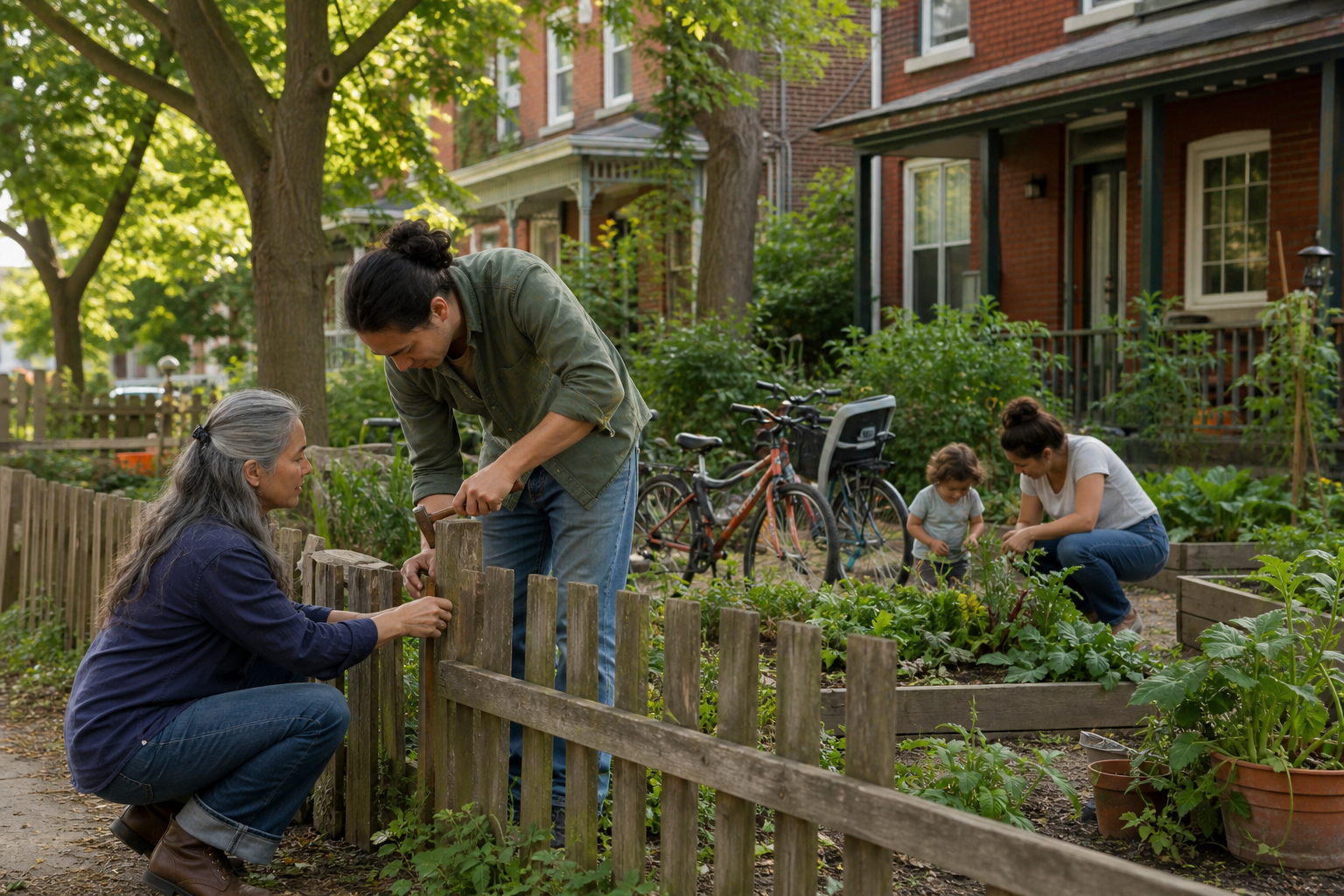
Reserves matter. Ground lease fees, rental income, grants, and partner contributions may all support operations, but the organization needs a realistic plan for staffing, legal work, property monitoring, major repairs, and unexpected problems. A trust that acquires more homes than it can steward risks weakening the stability it was created to protect.
A Practical Path From Idea to First Project
1. Define the Housing Problem Precisely
Start with the pressure residents experience. The issue may be displacement near new investment, a shortage of accessible homes, rising rents, vacant properties, or the loss of housing for essential local workers. A precise problem helps determine whether the trust should focus on ownership, rental housing, rehabilitation, or mixed community use.
2. Build Community Authority Early
Invite affected residents into decisions before choosing properties or designing eligibility rules. Discuss who the trust exists to serve, how the wider neighborhood will be represented, and what powers residents will hold. Community authority added after the financial structure is fixed will be narrow by design.
3. Secure Land and Patient Capital
Land may come through purchase, donation, public transfer, or partnership with another mission-led owner. Funding needs to cover more than acquisition. Legal setup, rehabilitation, resident support, reserves, and ongoing administration all require resources. A low purchase price can still produce an unsustainable project if the buildings need major work.
4. Write Rules People Can Understand
Ground leases, resale formulas, eligibility rules, governance rights, and maintenance responsibilities should be tested with the people expected to use them. Plain-language explanations do not replace legal documents, but they help residents make informed decisions and expose unclear assumptions before those assumptions become disputes.
5. Plan for Stewardship Before Expansion
Set up contact points, maintenance tracking, financial support routes, board reporting, and reserve policies before adding many properties. Growth should follow evidence that the trust can care for the homes and relationships it already holds.
Measure Whether the Trust Is Delivering Lasting Value
The easiest number to report is the number of homes acquired. It is important, but it does not show whether the model is working well.
Better evidence includes who can access the homes, housing costs relative to household resources, resident stability, property condition, energy burden, successful resales, participation in governance, and whether affordability reaches each new household. Tracking differences between resident groups and property types can reveal where an apparently successful average hides unequal outcomes.
This is an application of a broader framework for measuring social innovation without losing sight of people. Activity counts describe what the trust did. Outcomes show whether residents gained secure, suitable housing and whether community control survived over time.
Qualitative evidence matters too. Residents can explain whether rules feel understandable, support arrives early enough, governance feels consequential, and the home provides the stability promised. Those experiences should inform policy changes rather than sit in a testimonial file.
Where the Model Fits, and Where It Does Not
Community land trusts are especially useful where land values are rising, public land is available for a lasting community purpose, or a neighborhood wants to preserve affordability around new investment. They can also help organize scattered properties under one stewardship system.
They are not a complete response to a housing shortage. A trust still needs land, funding, suitable buildings, capable staff, willing partners, and fair access rules. Separating land ownership can add legal and financing complexity. Resale limits also mean the model will not match every household's expectations about wealth building.
Those limits should be discussed openly. The strongest case for a community land trust is not that it solves every housing problem. It is that it protects a specific kind of value that ordinary transactions often lose: a permanent connection between land, affordability, and community responsibility.
Housing That Stays Connected to Its Purpose
A community land trust turns one affordable home into part of a continuing system. Land remains under mission-led stewardship. Residents receive secure rights and a meaningful role. Resale rules share value between the household leaving and the household arriving next.
None of that happens automatically. It depends on understandable agreements, representative governance, careful property management, and enough resources to keep showing up long after the launch announcement.
When those pieces are in place, affordability can become more than a temporary discount. It becomes a neighborhood asset designed to last.