How to Measure Social Innovation Without Losing Sight of People
A practical framework for defining community outcomes, choosing useful evidence, and turning impact measurement into better decisions
August 18, 2026
•8 min read
Social innovation aims to change how a community problem is understood and addressed. That ambition creates a measurement challenge. A program may deliver all its planned activities while leaving the underlying problem almost untouched. Another may create important benefits that never appear in a standard reporting template.
Useful impact measurement connects daily work with the changes people actually experience. It helps a team decide what to continue, what to adapt, and what to stop. It also gives residents a fair way to judge whether a project is keeping its promises.
The goal is not to find one perfect number. It is to build a practical body of evidence that is clear enough for decisions, proportionate to the project, and accountable to the people affected.
Measurement Changes the Work
What a program measures quickly becomes a signal about what matters. If a job support service reports only attendance, staff may focus on filling sessions. If it measures whether participants find suitable work and can keep it, the team must pay attention to transport, childcare, employer practices, confidence, and support after placement.
This does not make activity counts useless. They show reach, workload, and whether delivery happened. The problem begins when they are treated as outcomes.
Good measurement keeps three layers separate:
- Activities describe what the program does, such as workshops, grants, visits, or repairs.
- Outputs describe what those activities immediately produce, such as completed plans, trained participants, or restored spaces.
- Outcomes describe meaningful changes in people's conditions, choices, capabilities, relationships, or access.
A fourth layer, long-term impact, concerns wider and more durable change. Most individual projects contribute to that change alongside many other forces. Honest reporting should describe that contribution without claiming sole credit.
Start With the Decision the Evidence Must Support
Before choosing indicators, name the decision that future evidence will inform. A team may need to decide whether to expand a pilot, change who receives support, redesign one stage, renew a partnership, or end an approach that is not helping.
Each decision requires different evidence. Expansion needs information about outcomes, demand, cost, delivery capacity, and where the model may not transfer. Redesign needs detail about where the participant journey breaks. A funding decision may require a clear account of both value and risk.
Without a decision in view, measurement plans often become long lists of everything that could be counted. Staff collect data because a field exists, not because anyone will use it. A short plan tied to real choices is more valuable than a large dashboard with no owner.
Build a Credible Outcome Pathway
An outcome pathway explains how activities are expected to lead to change. Begin with the problem as residents experience it. Then connect the resources, activities, immediate outputs, near-term outcomes, and longer-term goal.
Make the assumptions visible. A community kitchen may assume that affordable meals will improve food security, but access may also depend on opening hours, transport, cultural suitability, eligibility rules, and whether people feel welcome. Those conditions belong in the model because they can determine whether the service works.
The pathway should also record outside factors. Housing costs, policy changes, weather, local employment, and the availability of related services can alter results. Naming them does not excuse poor performance. It prevents the team from confusing context with program quality.

Review the pathway with participants and frontline workers. They can identify missing steps, unrealistic assumptions, and unintended effects that are easy to overlook from a planning meeting.
Combine Different Kinds of Evidence
No single method can explain a complex social outcome. Use a small, balanced set of evidence sources that answer different questions.
Administrative data can show reach, timing, completion, repeat use, and service patterns. Surveys can track reported experience or confidence when questions are accessible and relevant. Interviews and group discussions can explain why an outcome occurred, why it did not, and what changed unexpectedly. Observation can reveal barriers that participants have learned to work around and may no longer mention.
Physical or digital systems can add operational evidence. For example, digital twins can help cities understand infrastructure, but a model still needs local context to explain how people experience a street, building, or transport service. Technical evidence describes part of reality, not all of it.
Triangulation means looking for agreement, tension, and gaps across sources. If service records show strong completion but interviews describe confusion, both findings matter. The apparent contradiction may reveal that people complete a process only with hidden support from family, volunteers, or staff.
Make Residents Partners in Measurement
Participation should extend beyond answering questions designed elsewhere. Residents can help define success, select indicators, interpret findings, and decide how results are shared. This produces better evidence because the measures reflect lived priorities and local language.
The approach follows the same principle that makes civic technology work better when communities shape the question. People should influence what is being decided, not merely provide data after the important choices have already been made.
Participation must be genuine and accessible. Explain what influence people have, pay community contributors when appropriate, offer different ways to take part, and report back on what changed. Avoid collecting stories of hardship simply because they make persuasive publicity. People should understand how their information will be used and be able to decline without losing access to a service.
Measure Distribution, Not Only the Average
An average can improve while a group facing the greatest barriers sees no benefit. Review outcomes across relevant dimensions such as location, age, disability, language, income, or service channel, while collecting only the personal information needed for a clear purpose.
Distribution matters because access and outcomes are not the same. A program may place a service online and reach more people overall while making it harder for some residents to participate. The same lesson appears in work showing that digital inclusion requires more than an internet connection: suitable devices, skills, accessible services, trust, and support all shape whether access becomes a useful outcome.
Look for who starts, who completes, who benefits, who returns, and who disappears from the process. Follow-up with people who leave can be especially informative, provided contact is respectful and optional.
Use Comparisons Carefully
Change over time is easier to understand when a program records a useful starting point. A baseline does not need to be elaborate. It may combine current service data, a short participant assessment, observation, and a description of local conditions before work begins.
Comparison groups can strengthen some evaluations, but they are not always practical or ethical. Small community projects may have limited numbers, changing participation, or no fair way to withhold support. In those cases, teams can compare different periods, locations, delivery approaches, or levels of participation while being explicit about the limits.
Avoid pretending that precision removes uncertainty. Social outcomes are influenced by many connected systems. State what the evidence supports, what remains uncertain, and what alternative explanations were considered.
Turn Reporting Into a Learning Cycle
Measurement has little value if findings arrive after every meaningful decision. Set a review rhythm that matches the pace of the work. Frontline teams may need short monthly discussions about recurring barriers. Partners may review outcome trends each quarter. Longer-term effects may require annual follow-up.
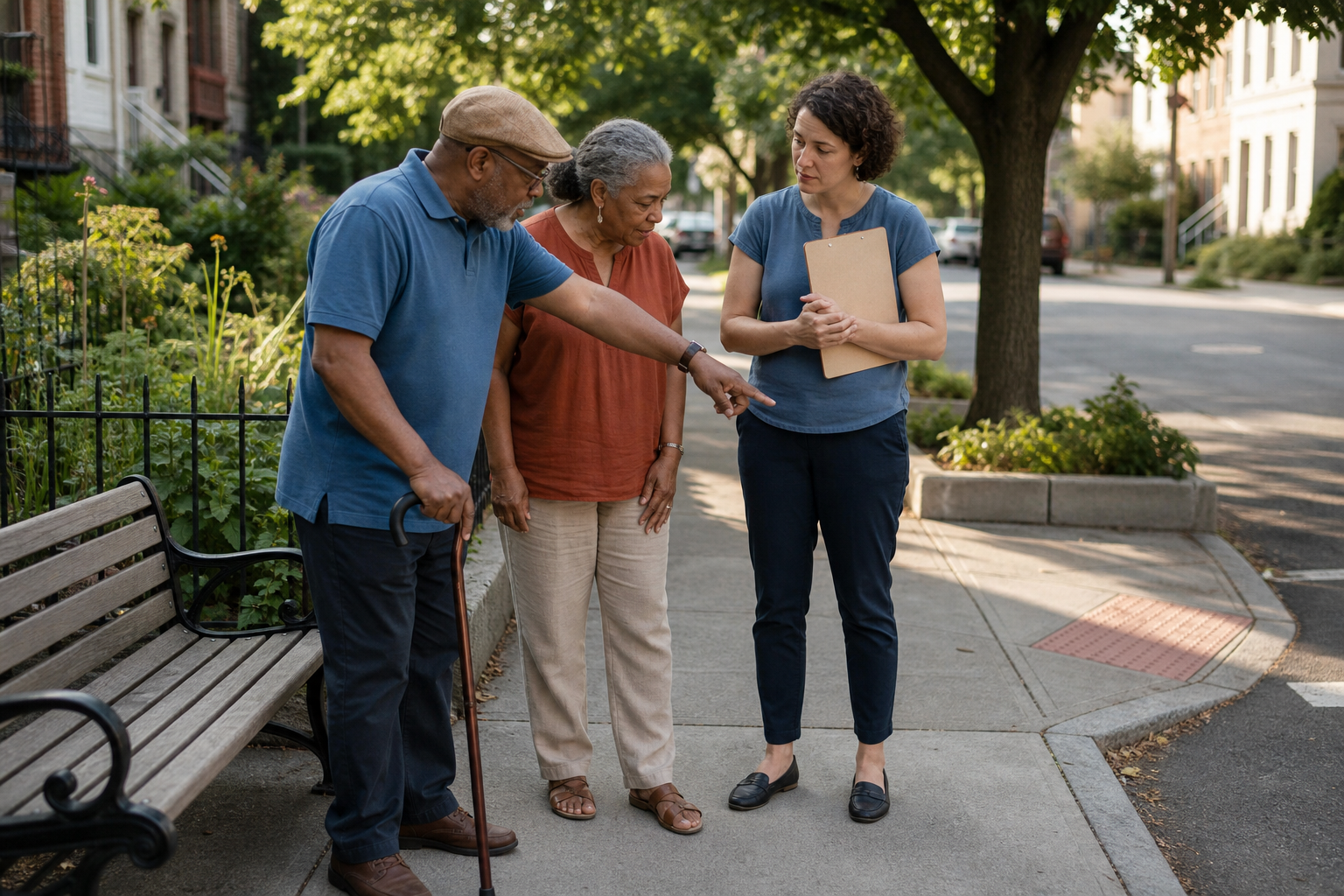
Each review should end with a named action, owner, and date. The action may be to test a new referral route, simplify an intake question, investigate an unequal outcome, or leave a working element unchanged. Record why the choice was made so the team can later judge whether the response helped.
Share findings in forms people can use. A concise public summary, community meeting, accessible visual explanation, or translated handout may be more useful than a long technical report. Include difficult findings and unintended effects, not only successes.
Keep the System Proportionate
Measurement should not consume the capacity needed to deliver the work. Choose the smallest set of indicators that covers reach, quality, outcomes, equity, and unintended effects. Assign an owner for each item and a reason for collecting it.
Before adding a measure, ask:
- What decision will this evidence inform?
- Who needs to understand it?
- How will it be collected without creating unnecessary burden?
- What could this measure miss or distort?
- When will the team review it?
- When should collection stop?
Remove measures that are never discussed. Automate routine collection only when definitions are stable and privacy is protected. Keep space for open feedback because social innovation often produces results that were not predicted at the start.
Evidence Should Improve Accountability
Strong measurement does more than prove that work happened. It makes assumptions testable, unequal outcomes visible, and adaptation possible. It gives funders and partners a clearer account of progress while giving communities evidence they can challenge and use.
Start with the outcome people value, connect it to a credible pathway, combine numbers with lived experience, and review evidence while there is still time to act. Measurement then becomes part of the innovation itself: a disciplined way to learn whether change is meaningful, for whom, and under what conditions it can last.