How Participatory Budgeting Turns Community Priorities Into Public Spending
A practical guide to designing a fair participatory budgeting process that connects resident ideas, public decisions, and visible local results
September 1, 2026
•8 min read
Public budgets can feel distant from daily life. Residents see a damaged footpath, an unsafe crossing, or an empty public space, but may not know how those needs become funded projects. Consultations can collect opinions without showing which choices are genuinely available.
Participatory budgeting creates a clearer connection. A public body sets aside a defined amount of money, residents develop eligible ideas, workable proposals go to a community vote, and the winning projects are delivered through the normal public spending system.
The method is simple to describe, but a credible process takes careful design. The budget must be real, the rules must be understandable, participation must reach beyond the usual meeting attendees, and delivery must remain visible after voting ends. Otherwise, an exercise intended to share power can become another consultation with better branding.
What Participatory Budgeting Changes
Traditional public engagement often asks residents to comment on a plan prepared by officials. Participatory budgeting starts earlier and gives the community a bounded decision over money.
That boundary matters. Residents are not being asked to redesign an entire municipal budget in one evening. They are choosing how a specific fund should be used within stated legal, geographic, and operational limits. The fund might support neighborhood improvements, youth projects, public health initiatives, small climate adaptations, or equipment for shared facilities.
A well-designed cycle divides responsibility. Residents identify needs, shape proposals, and choose priorities. Staff explain constraints, estimate costs, test feasibility, and deliver approved work. Governing bodies authorize the fund and remain accountable. People should know from the beginning which decisions are open, which are fixed, and who is responsible when a project stalls.
Begin With a Budget That Can Actually Be Spent
The first design question is not how to vote. It is what money is available and what it can legally purchase.
Set a clear total, funding source, eligible area, project size range, and delivery period. Explain whether the fund can pay for construction, programs, equipment, maintenance, staffing, or only some of those categories. If a new asset will create ongoing costs, identify who will own and maintain it before proposals open.
Avoid inviting ideas before these constraints are settled. Asking people to imagine freely and rejecting most suggestions later wastes community effort. Clear boundaries do not weaken participation. They make the available choice honest.
This is also where process design should follow the lesson that civic technology works best when communities shape the question. A voting platform can support the process, but it cannot repair a budget whose purpose was decided without the people expected to use it.
Design Participation Around Real Barriers
An open invitation does not create equal access. Public meetings favor people who know about them, can travel, feel comfortable speaking in groups, and are free at the scheduled time. Online voting can exclude residents without reliable devices, connectivity, confidence, language support, or accessible interfaces.
Use several routes into the process. Short sessions at schools, libraries, markets, housing sites, community centers, and existing local gatherings can reach people who will not attend a central workshop. Paper, phone, supported digital, and in-person options can serve different needs without creating separate classes of participant.
Plan for interpretation, accessible venues, transport, childcare, and varied meeting times. Pay community partners for substantial outreach instead of treating trusted relationships as a free distribution channel.
Digital tools should remain one part of the system. The broader principles of digital inclusion beyond internet access apply here: people need suitable devices, usable services, practical skills, and trusted help, not merely a web address.
Turn Community Needs Into Workable Proposals
Residents often begin with a problem rather than a project. “This route feels unsafe” or “young people have nowhere to gather” is valuable knowledge, but it still needs to become a proposal that can be costed and delivered.
Proposal workshops can bring residents, facilitators, and relevant staff together to define the need, identify who would benefit, explore possible responses, and test assumptions. Staff should advise without taking ownership away from the people who raised the issue. Their job is to explain matters such as land ownership, safety, accessibility, maintenance, permissions, and realistic cost.
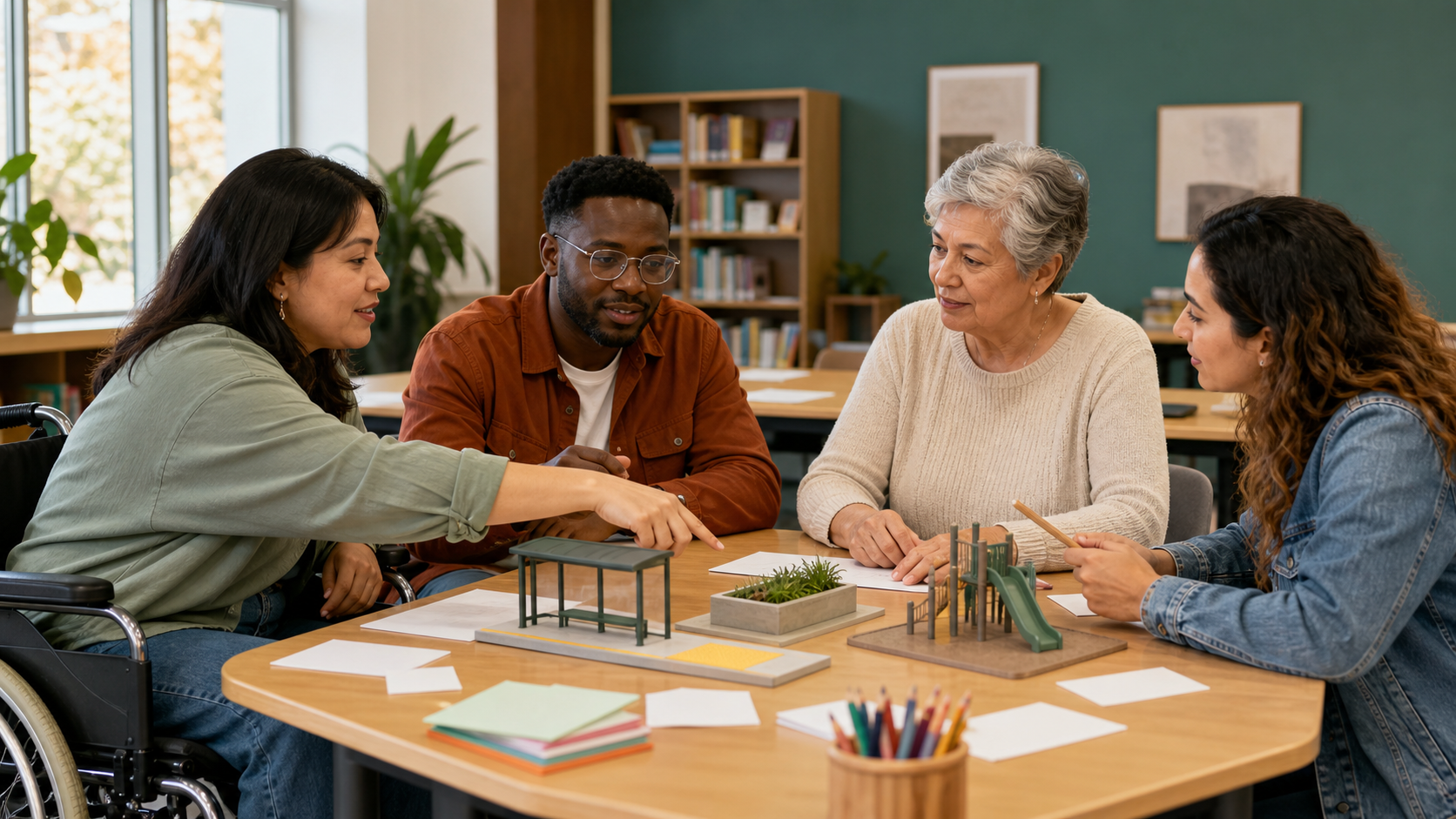
Every proposal presented for a vote should explain the local need, proposed response, expected beneficiaries, cost, delivery lead, and ongoing responsibility. Cost estimates should state what they include and what could change them.
Use plain language and comparable detail. A polished proposal should not gain an advantage simply because its supporters have professional design or grant-writing experience. Facilitation should help every eligible idea reach a minimum useful standard.
Make Eligibility Decisions Explainable
Some proposals will be impossible, outside scope, unsafe, duplicative, or too expensive. The screening process needs written criteria and a record of decisions.
Publish criteria before ideas are submitted. When a proposal cannot proceed, give a specific reason and, where possible, suggest a viable alternative. Similar ideas may be combined with the consent of their authors. A smaller version may fit the budget. A request outside the fund may still be referred to the department responsible for the underlying issue.
A visible decision log helps residents distinguish a genuine constraint from an uncomfortable preference. It can also reveal recurring needs that fall between existing programs.
Choose a Voting Method That Matches the Goal
The method should match the number and size of projects and the available budget. Residents might choose a fixed number, rank preferences, or build a portfolio that fits within the fund. Provide a short worked example using fictional options and no favored outcome.
Define who can vote and how eligibility will be checked without collecting more personal information than necessary. Explain how duplicate votes, ties, invalid ballots, and accessibility support will be handled. Test the ballot with residents before launch, especially with people using assistive technology or a language other than the organization’s default.
Publish turnout and results in a way that protects privacy. The goal is a trustworthy record of which projects were selected, how the rules were applied, and what happens next.
Treat Delivery as Part of Participation
The vote is the midpoint of the process, not the finish. Delayed or invisible delivery teaches residents that participation changes little, even if the original decision was fair.
Assign a named delivery owner to each winning project. Publish a simple status, expected milestones, current risks, and a route for questions. When timelines change, explain why. Procurement, permits, weather, or site conditions may create legitimate delays, but silence makes those delays look like abandonment.
Residents who developed a proposal can help review detailed design and test whether the result still addresses the original need. They should not be expected to replace professional project management or unpaid maintenance, but their involvement can catch practical problems before work is complete.
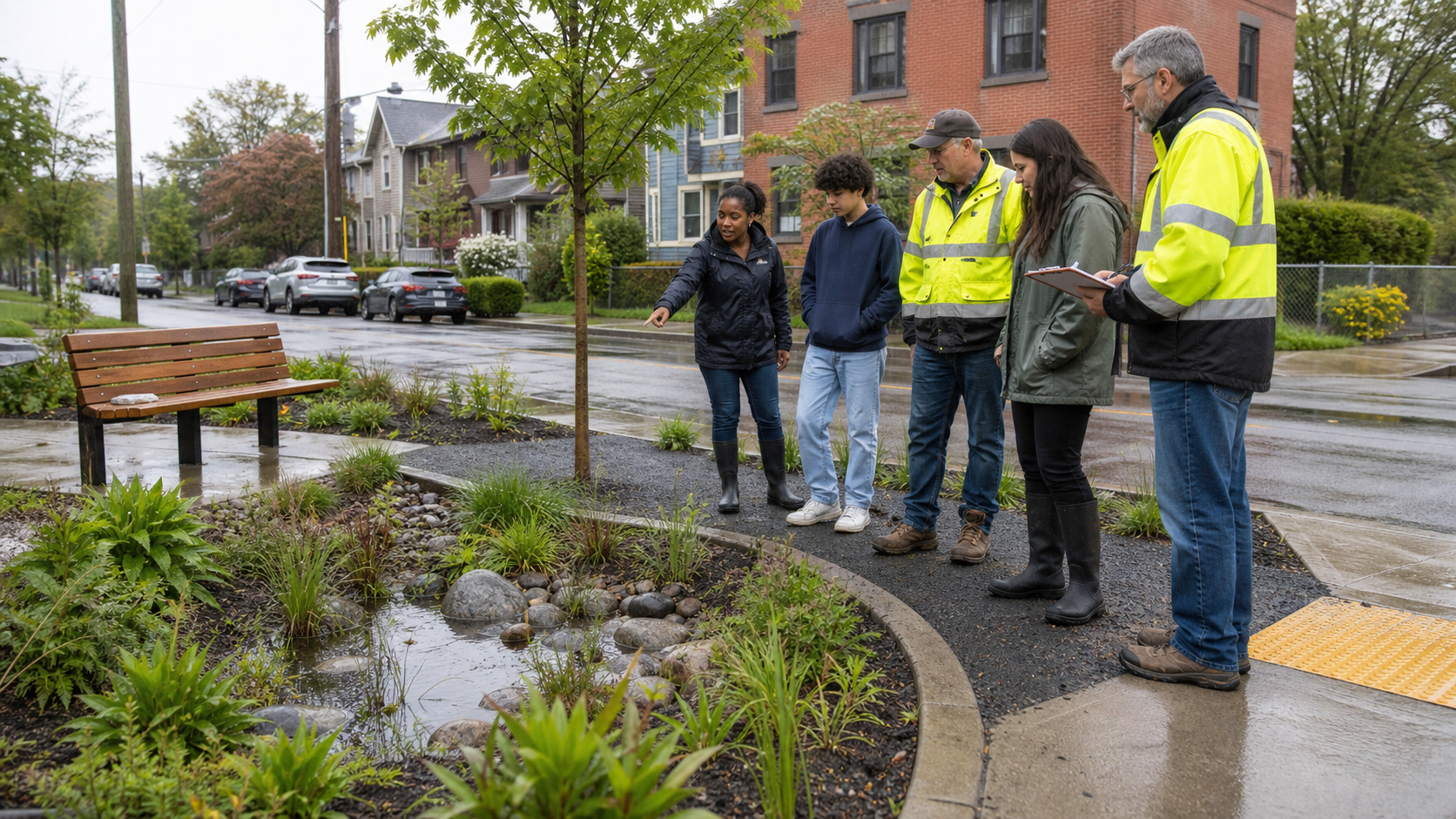
Close the loop after completion. Show the final cost, explain material changes, and invite users to review the project once it has been operating long enough to reveal strengths and problems. Visible delivery is what turns a ballot into public confidence.
Measure More Than Participation Numbers
Registration, proposal, and vote counts help describe reach, but they do not show whether the process shared influence fairly or produced useful public value.
Review who participated, who was underrepresented, why proposals were ruled out, whether winning projects were delivered, and whether people can use the results. Examine the time and support required from residents as well as staff.
Qualitative evidence is essential. Ask whether the rules were understandable, staff advice felt fair, voting options reflected community needs, and progress was easy to follow. This connects with a broader approach to measuring social innovation without losing sight of people: activity data matters most when it helps improve decisions and lived outcomes.
Use the findings to change the next cycle. Outreach may need different partners. Cost estimates may need more time. The eligibility boundary may be confusing. Delivery updates may need a clearer owner. Repetition should make the process more capable, not merely more familiar.
Common Failure Modes to Avoid
-
A symbolic budget: The scope is too small to address the needs raised.
-
Late participation: Residents cannot influence the fund’s purpose or rules.
-
A digital-only process: The platform excludes part of the community.
-
Unequal support: Well-connected groups receive more help with proposals.
-
Opaque screening: Proposals disappear without reasons or a route to revise them.
-
Weak delivery capacity: Winning projects have no team, timeline, or maintenance plan.
-
No learning: Participation gaps and delivery problems repeat in the next cycle.
A Public Decision People Can Follow
Participatory budgeting works when residents can trace a line from local experience to a funded proposal, from a fair vote to delivery, and from delivery to learning. It does not remove political choices or administrative constraints. It makes a defined set of those choices easier to understand and opens them to community judgment.
When the budget is real and the process stays accountable after the ballot, residents gain more than a chance to express a preference. They gain a practical role in deciding how public resources shape the places they share.