How to Build a Community Asset Map People Can Use
A practical guide to discovering local strengths, checking access and availability, protecting consent, and turning community knowledge into useful connections
October 13, 2026
•8 min read

A neighborhood can have useful meeting rooms, skilled residents, informal groups, shared equipment, and trusted gathering places that remain disconnected. People know pieces of the picture, but newcomers and organizers may struggle to discover whom to ask or what is actually available.
A community asset map brings that knowledge together. It identifies strengths that people value and can draw on: abilities, relationships, organizations, spaces, and resources. The result might be a paper map, a searchable directory, a simple list, or a combination of formats.
Its value comes from the connections it makes possible. A collection of pins is a starting point. A useful map explains how to approach a resource, whose permission matters, and what someone can realistically do next.
Decide What the Map Should Help People Do
Begin with a practical purpose. Are residents looking for places to meet? Is a community group trying to connect people who want to share skills? Are newcomers finding local activities difficult to discover?
Choose a manageable area and audience. Mapping every resource in a city can consume the team's capacity before anyone benefits. A neighborhood, one group of villages, or a network organized around a shared interest may be a better first scope.
Agree who will use the information and who can change it. Residents should help define what counts as useful, rather than merely supply entries for an institution's database. The principles behind community participation that shapes civic technology apply before a mapping platform is selected.
Write a short purpose statement and name a decision the first version should support. For example: help local groups identify suitable places for small gatherings and make an informed first inquiry.
Look Beyond Buildings and Formal Services
An asset map can include a library or community center, but formal organizations are only part of community capacity. Look for informal walking groups, language skills, cultural knowledge, neighborhood networks, shared equipment, and people who enjoy introducing others.
Useful starting categories include:
- People and skills: Knowledge, interests, and abilities residents choose to share.
- Groups and relationships: Clubs, informal associations, mutual support, and trusted connectors.
- Places and equipment: Meeting rooms, gardens, workshops, tools, and usable public spaces.
- Organizations and services: Local institutions, community businesses, and support available through them.
- Shared knowledge and traditions: Stories, practices, and local experience that people consider valuable.
Let residents adapt those categories. A resource can fit several, and some relationships will not fit a geographic pin at all. Recognizing local strengths also does not remove unmet needs or justify withdrawing funded services. Record barriers alongside opportunities.
Discover Assets Through Conversations

Start with people who already connect others, then ask whom the team has not yet heard from. A club organizer may know regular members well while knowing little about residents who cannot attend its meetings.
Use a mixture of small conversations, neighborhood walks, phone calls, and accessible gatherings. Ask where people go to learn, meet, make things, or get practical support. Invite stories about occasions when neighbors organized something successfully.
Separate three questions: what exists, what someone values, and what they are willing to make available. A resident can be a skilled carpenter without wanting to receive public repair requests. A private garden can matter to a community without being open to visitors.
Explain the project before collecting names or details. Let people decline, contribute anonymously where practical, or suggest a resource without authorizing its publication. Ask the owner or organizer directly before treating a suggestion as a confirmed offer.
Make Each Entry Actionable
A directory entry should help someone take a sensible next step. Choose a small set of fields that support the map's purpose and can be maintained:
- Resource: A clear name and short description of what it offers.
- Availability: When it can be approached, including relevant limits.
- Access conditions: Cost, booking, membership, eligibility, or permission requirements.
- Access information: Verified details about the venue, communication options, and available support.
- Contact route: An approved way to make an inquiry.
- Status and review date: Whether the entry is confirmed and when it was last checked.
Keep suggestions awaiting confirmation separate from public listings. Record who supplied a detail so it can be checked, while keeping that person's private information out of the public view.
Plain descriptions are better than broad labels. “Room available to community groups by arrangement” becomes more useful when the organizer confirms booking times, fees, capacity, and whom to contact.
Check Availability and Access With the People Involved
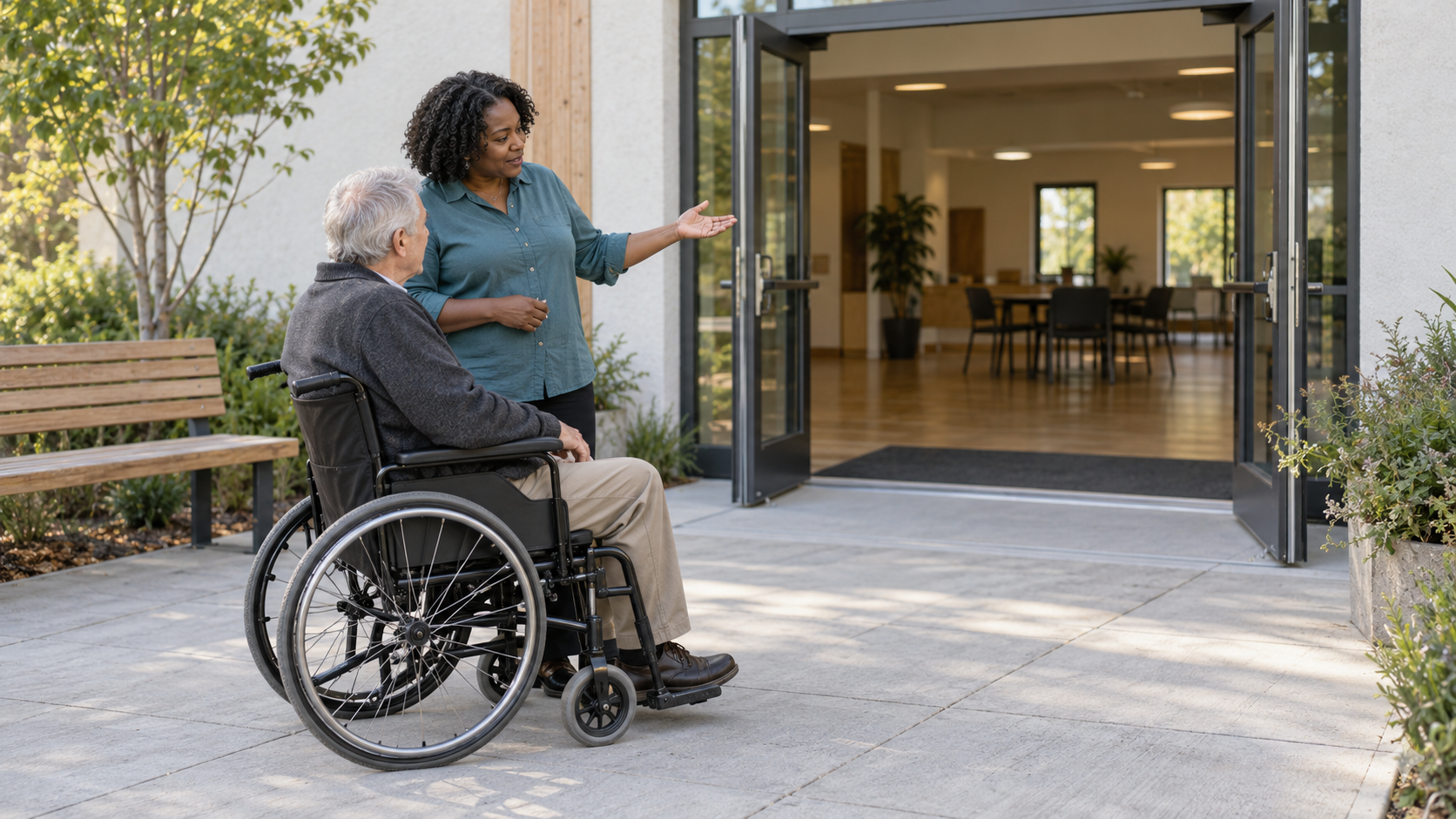
Being nearby does not make a resource reachable. A room may have limited hours, a booking charge, an inaccessible entrance, or conditions that exclude the intended participants. A group may welcome newcomers but communicate only through a channel they cannot use.
Check details with the person responsible and, where possible, people who use the resource. Record specific access information rather than making an unsupported claim that a place is accessible to everyone. Distinguish an observed feature from information supplied by the venue.
Invite users to describe difficulties without requiring them to disclose sensitive personal circumstances. A failed inquiry can reveal an obsolete contact, unclear booking process, or unsupported language need.
Keep availability conditional where appropriate. A listing should not promise a volunteer's time, a room booking, or a service place. It should explain how to ask and who makes the decision.
Agree What Can Be Shared
Treat public publication as a separate decision from gathering information. Ask people and groups to approve the description, location detail, and contact route that will appear.
A coordinator's inquiry channel may be more suitable than a personal phone number. An informal group may prefer an introduction rather than a public meeting address. Some culturally sensitive places or private gathering spaces may need to remain outside the public map entirely.
Collect only information needed for the agreed purpose. Keep permission records and private coordination notes separate from the public directory, and limit access to people maintaining them. Explain how someone can correct an entry, withdraw an offer, or request removal.
Agree stewardship before launch. Identify who holds the records and how they will be handed over if a partner or volunteer leaves. Community knowledge should remain usable under the terms contributors understood.
Offer a Useful Route Without a Digital Account
A digital map can help with searching, filtering, and updating entries. It can also make participation dependent on a suitable device, connectivity, confidence, or an accessible interface.
Offer a printed list, telephone inquiry, or supported conversation alongside the online version. Choose formats that fit the audience. A short directory organized by activity may be easier to use than a geographic map with overlapping markers.
The framework for digital inclusion beyond an internet connection helps the team consider the whole journey. Ask someone to find a resource, understand its conditions, and make an inquiry using their preferred route.
Give printed versions a visible review date and a correction contact. Keep public versions consistent enough that choosing an offline route does not mean receiving poorer information.
Turn Discovery Into One Practical Connection
Imagine a neighborhood group looking for somewhere to hold a beginner sewing session. Its map identifies residents interested in sharing skills, a potential meeting room, and a group with equipment it might lend.
This hypothetical example is a starting point for conversations. The organizers still need to confirm willingness, room suitability, equipment condition, costs, responsibilities, and arrangements for the activity.
Support one manageable connection and learn from it. Ask what the map made easier and what still required personal introductions or additional resources. Do not keep collecting entries simply because the directory can grow.
Maintain the Map and Review Its Usefulness
Assign a maintainer and backup, a correction route, and a realistic review schedule. Recheck entries when contacts change or users report a problem. Mark uncertain information clearly, and remove expired offers from the public version until they are confirmed again.
Review what people could do with the information. Did they find a suitable space, join an activity, or connect with someone willing to help? Which inquiries stalled, and who struggled to use the map?
The approach to measuring social innovation through community outcomes keeps evaluation focused on those experiences. Entry counts describe the inventory; useful connections show whether it serves its purpose.
A strong first version has a clear use, contributors who understand how their information is shared, verified entries, and someone responsible for keeping it current. Build outward as residents discover what helps them act together.
Images are AI-generated illustrations of community asset discovery and access conversations.