How to Start a Community Repair Café That People Keep Coming Back To
A practical guide to planning a welcoming repair café, supporting volunteers, sharing skills, and learning whether repaired belongings stay in use
September 15, 2026
•8 min read
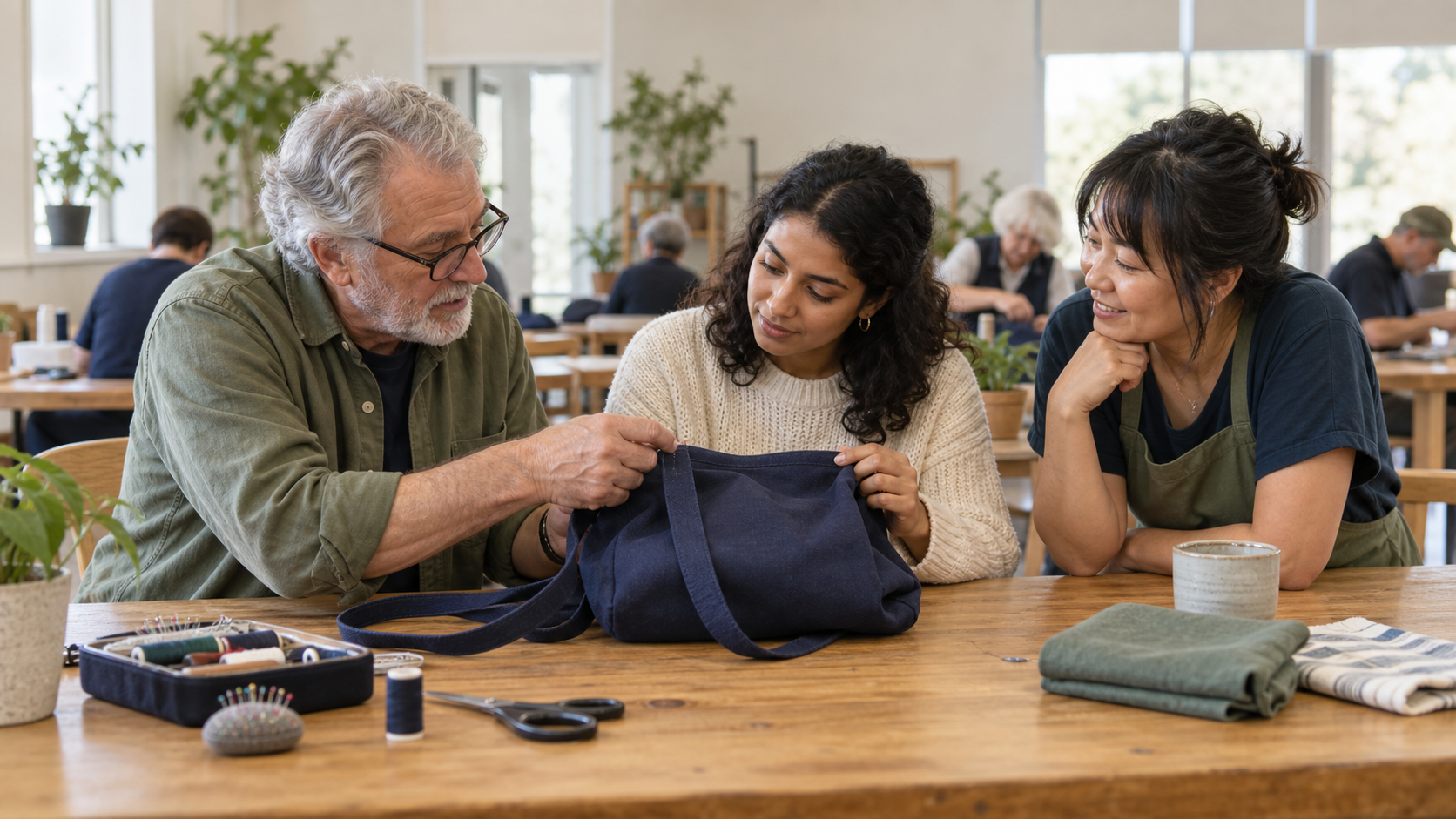
A loose bag strap or torn jacket can become a reason to replace something that still has years of useful life. The missing ingredient may be a small repair skill, a suitable tool, or someone willing to help diagnose the problem.
A community repair café brings those ingredients together. Residents bring belongings, volunteers contribute practical knowledge, and people work through repairs together where possible. Repair Café International describes the model as a place for shared repair and learning. It is not a drop-off workshop with a guaranteed result.
For organizers, the challenge is making that promise reliable. A successful first event needs a manageable scope, a welcoming arrival, suitable skills, and clear limits. A lasting program also needs people who want to return, including the volunteers doing the work.
Begin With Local Demand and Existing Skills
Before booking a large hall or collecting tools, talk to residents and potential volunteers. Ask what people struggle to repair, what they already know, and what prevents them from getting help. Speak with existing repair businesses and community groups to understand what is already available.
The answers may suggest a clothing-mending session rather than an event accepting every household object. A small, dependable offer is easier to explain than a broad promise the team cannot fulfill.
This follows the same principle as letting communities shape the question before choosing civic technology. Start with the local problem and the people affected. Decide later whether bookings, a shared calendar, or any other digital tool would help.
Write a one-sentence purpose that the team can use to make decisions. For example, a proposed pilot might aim to help residents keep everyday clothing in use while learning basic mending skills. That purpose makes the venue, volunteer roles, and publicity easier to choose.
Define What the Event Can Accept
Make an accepted-items list based on demonstrated skills, available equipment, workspace, and time. Publish exclusions just as clearly. An enthusiastic volunteer is not automatically qualified for every repair.
Agree who can decide that a job is outside the event's scope. Volunteers should be comfortable stopping when they lack the knowledge, parts, testing equipment, or conditions to proceed. A referral to an appropriate professional can be a useful outcome.
Electrical items and safety-critical equipment need specialist arrangements. Do not include them simply because someone owns a screwdriver. Confirm the relevant requirements with the venue, insurer, and appropriately qualified advisers before advertising those categories. A first pilot can stay focused on simpler work the team is equipped to handle.
Explain expectations in plain language: what people may bring, whether they should stay, how queues work, how materials are paid for, and what happens if a repair cannot be completed. Avoid promising that every item will leave working.
Build a Team Around the Whole Visit
Repair skills are essential, but the event also needs someone to welcome arrivals, manage the queue, answer questions, replenish supplies, and coordinate the room. Otherwise, the most experienced repairer can spend the afternoon solving reception problems.
For a small pilot, assign responsibility for four functions:
- Coordination: Venue arrangements, schedule, supplies, and decisions when something unexpected happens.
- Welcome and assessment: Explaining the process and matching items to suitable volunteers.
- Repair and learning: Working within agreed capabilities and involving the owner where appropriate.
- Closeout: Recording the outcome, explaining next steps, and gathering brief feedback.
One person may cover several functions, but avoid making one person responsible for everything. Pair new volunteers with experienced colleagues and plan breaks. Confirm who can attend before opening bookings, rather than building a schedule around hoped-for availability.
Make Arrival Easy to Understand
Choose a venue with accessible entry, usable toilets, suitable tables, good lighting, and enough room for people to move without crowding work areas. Check storage, setup time, cleaning, and who holds the keys. Keep refreshments separate from repair work.
Publicity should state the actual offer, location, timing, access arrangements, accepted items, and any expected materials costs. Provide a way to ask questions before traveling with a bulky or sentimental belonging.
An online form can help estimate demand, but it should not become the only entrance. Phone or in-person booking may be more useful for some residents. The principles of digital inclusion beyond internet access apply even to a largely offline event: participation depends on whether people can understand and use the route you provide.
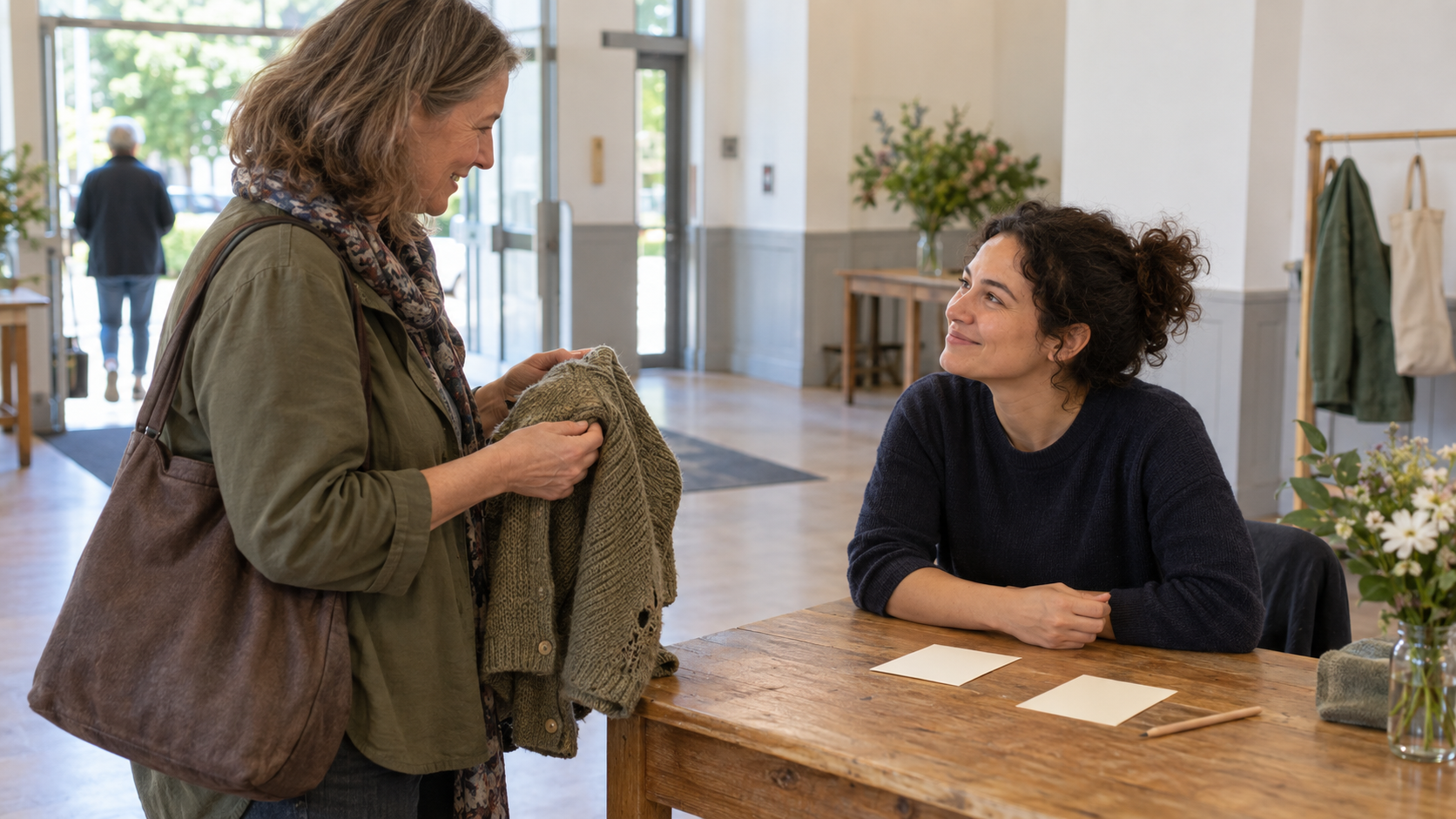
At arrival, ask what is wrong, what the owner has already tried, and whether anything important needs to be preserved. A visible patch may be welcome on a work jacket and unwanted on a treasured garment. Agree on the intended result before work begins.
Use a Simple Assessment and Queue Process
Give each item a short record that stays with it. Capture only what the team needs: the item, reported problem, assigned volunteer, agreed work, and eventual outcome. Collect contact details only when there is a clear reason and explain how they will be used.
Keep the first assessment separate from the repair itself. The welcome team can identify unsuitable categories and explain likely waits; the repair volunteer decides whether the specific job is feasible.
Use a fair rule for busy periods, such as assessing one item per visitor before accepting another. Set a point when new work stops so volunteers have time to finish safely and pack up. Do not let a full room pressure people into rushing.
If a repair needs a part, explain what is needed and whether a return visit is realistic. Avoid keeping belongings indefinitely without a clear storage and collection arrangement.
Make Learning Part of the Repair
It can be quicker for an expert to take over. That may restore the item, but it misses an opportunity to make the owner more confident about future maintenance.
Explain the diagnosis, describe the options, and invite participation that matches the person's interest and ability. Someone may want to practice a stitch. Someone else may prefer to watch and ask questions. Shared learning should be an invitation, not a test people must pass to receive help.
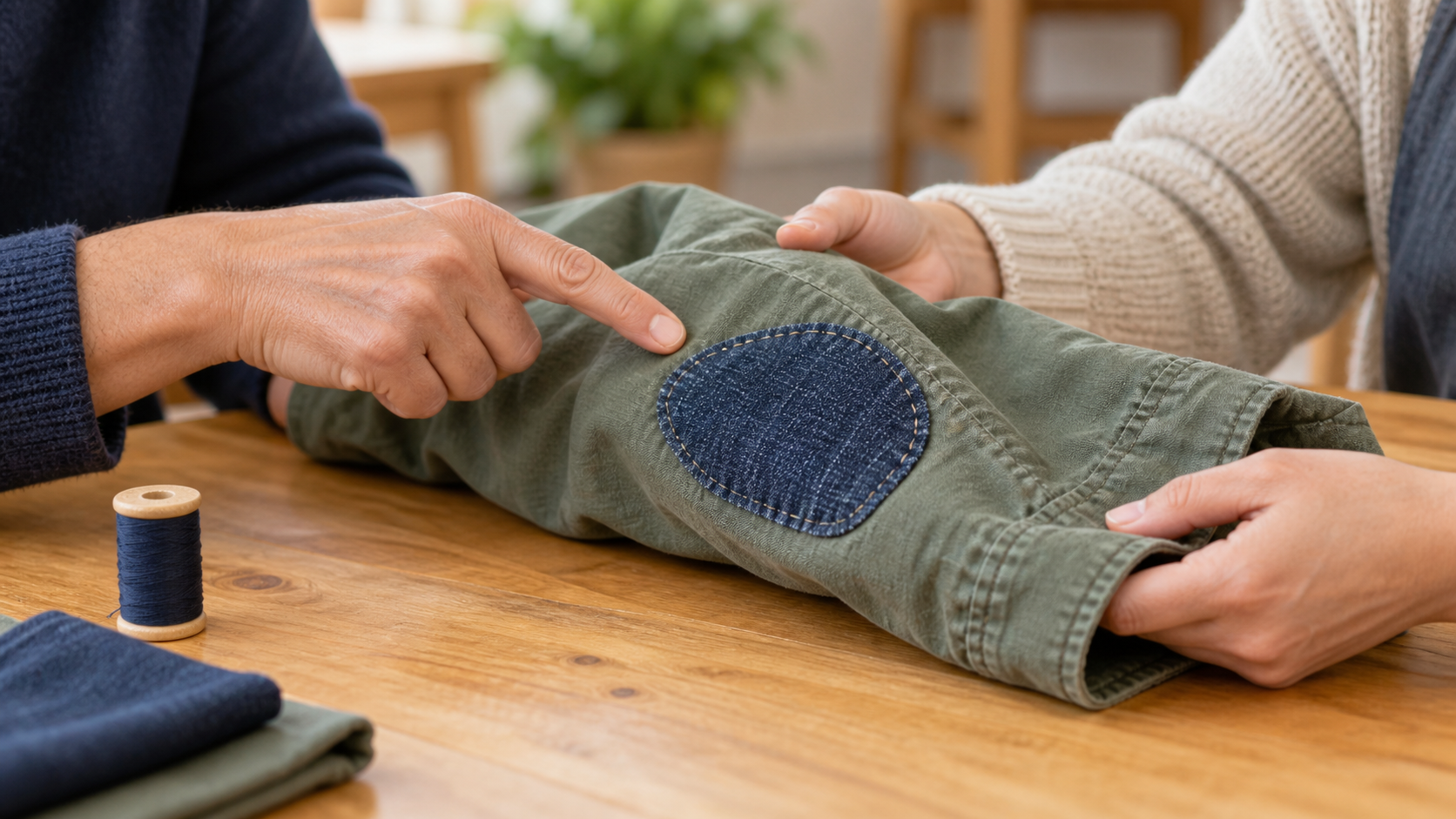
Before the visitor leaves, summarize what changed, any remaining limitations, and the next useful step. For a garment, that might mean explaining how to care for the repaired area. For an unfinished item, it might mean writing down the part or professional service needed.
Respectful language matters. People should not feel embarrassed about buying an inexpensive product, lacking tools, or attempting an unsuccessful fix. Curiosity helps a shared learning space work.
Budget for the Work Behind the Tables
Free participation still has costs. Plan for venue hire, insurance arrangements, consumables, equipment upkeep, accessibility support, volunteer expenses, storage, and coordination time. Borrowed equipment also needs an owner responsible for its condition and return.
Keep any donations clearly voluntary and explain materials charges before work begins. Residents should not discover an unexpected cost after a volunteer has started taking something apart.
A host organization may contribute space or administration, while another partner provides supplies. Put those commitments in writing so the event does not depend on one person's informal favors. Review the real workload before announcing a recurring schedule.
Measure More Than the Number of Repairs
Track a few useful outcomes: completed repairs, partial repairs, items needing parts, referrals, and jobs outside scope. Note recurring barriers, such as missing components or insufficient time, so the next event can respond.
A completed repair does not prove that an item stayed in use or that a new purchase was avoided. If participants agree to a brief follow-up, ask whether the repair held and what happened next. Keep any environmental estimates separate from directly observed results and explain their assumptions.
The wider framework for measuring social innovation through community outcomes is useful here. Include whether visitors learned something, felt welcome, or would return. Ask volunteers whether the workload was manageable and what support was missing.
Earn the Next Event
After the pilot, bring the team together while details are fresh. Review the queue, accepted categories, visitor questions, supplies, and unfinished work. Choose a few concrete improvements rather than expanding every part of the offer.
Publish the next date only when the venue and volunteer capacity are confirmed. A modest event that happens reliably can build more trust than an ambitious schedule that repeatedly changes.
The strongest repair café leaves more than restored belongings behind. It gives residents a place to ask for help, volunteers a sustainable way to contribute, and practical knowledge a route from one person to another.